
The Waggle Vol. # 26- Everything, Everywhere, All At Once
The Low Country, Old Memories, and The Chechessee Creek Club

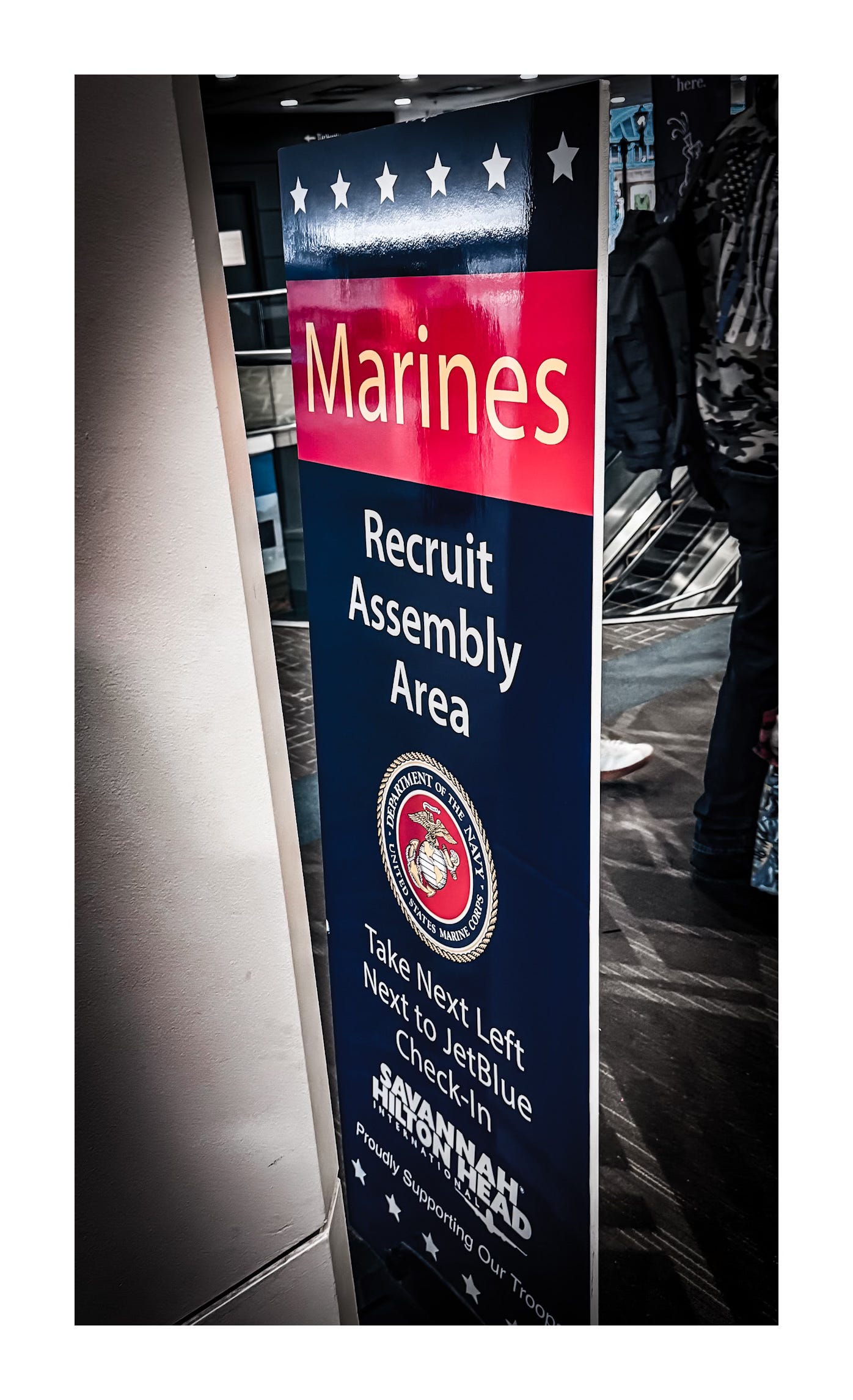
It’s only after getting off the plane at Savannah airport a few weeks ago and heading to baggage claim that I really think about where I am. There is a small sign tucked behind an unused security partition. I don’t think anyone else notices it. “Marines- Recruit Assembly Area” is what it reads. In this part of the world, the major airports are often gathering points where small groups of nervous kids from all over the country awkwardly huddle, send final text messages, and try to absorb the last vestiges of modern life they will see for the foreseeable future. Then they will be collected and bused down the road in the middle of the night to Marine Corps Recruit Depot, Parris Island, to stand on the famous yellow footprints. I know what I am looking at. A long time ago, I stood on those footprints myself. And I briefly think of the heat. And the humidity. And the screaming. And of a different lifetime.
So returning to the Low Country always carries with it historical weight and memory for me. As it should. This part of South Carolina and Georgia, such as you find it, seems to always recall an earlier time- a reminder of our stark, primordial, and swampy origins. In this part of the world, nature feels ready to reclaim what is theirs should we turn a distracted eye from our own creations. Time and space feel borrowed here, and if you’re looking to hide away from the world a little bit, this isn’t a bad place to choose. The tidal swamps, inlets, and rivers meander and weave together seemingly without direction or landmark, and it’s easy to imagine becoming disoriented and lost when navigating the waterways of the Low Country. The end result, at least to me, is that the past never really feels very distant in this part of the world- the center of history here feels elusive, and there is a fine distinction between what is presented to you and what you are supposed to notice.
We are here on the invitation of my friend, P., to visit the Chechesee Creek Club (C3 as it’s known), the private Coore and Crenshaw design located just across Broad River from Parris Island in Okatie, South Carolina, and just down the road from Hilton Head. For those of us living in New England, the idea of Southern golf is always welcomed in the winter, but we were warned, in the days leading up to the trip, to “bring pants.” At home, I tossed an additional wool sweater into my bag as a reverse-jinx talisman, hoping that by bringing extra gear, it would turn out to be unneeded. The strategy had mixed results. But it's been a long winter so far in the Northeast. The idea of mid-50s temperatures and the ability to play outside feels liberating in comparison to New England’s feet of snow, wind, and endless practice swings in the living room while waiting for the new golf season to roll around. Truly afflicted golfers all become a little desperate this time of year, and you’ll likely know the feeling I’m talking about. (It’s better that we don’t mention the horrors of simulator golf in these pages. Some things are better left undiscussed. )
So a mid-winter trip was welcomed.
I am finding, over time, that the places in golf that I end up thinking about the most are often the places that surprise me. But I don’t usually let that happen naturally; it’s not part of my process. Typically, I read, watch, and listen to everything I can beforehand so I don’t miss anything on these visits. I am not sure why- maybe it was the idea of being across the street from Parris Island- but on this trip, I did almost nothing in preparation except get my clubs together. Outside of understanding that Chechessee was a private, somewhat secluded club and a Coore and Crenshaw design, I was mostly flying blind and felt good about that.
If you’re reading this volume of The Waggle, you likely don’t need me to tell you who Ben Crenshaw and Bill Coore are and why their golf architecture partnership has been one of the most important collaborations in the modern era of golf. If you don’t know, take a second and Google it. They are hugely influential, and this point probably can’t be overstated. In golf architecture circles, a certain amount of time is spent discussing the current era of golf course design as being inspired by the ‘minimalist’ school of thought. The growing number of C&C courses now spread across the globe is, in part, directly responsible for these ideas. The typical Coore and Crenshaw course is almost always described as some version of feeling “found” in the landscape rather than the course being forced, “built up,” or imposed upon the land. To be fair, they almost always have really interesting- world-class, really- pieces of golfing ground to work with. But there’s the rhythm and restraint involved, and it’s an artistic route-finding more than brutish construction. In this timely and interesting piece he just published on Bill Coore on his own Substack, the author Michael Croley talks about Bill Coore looking at golf courses in the following way:
“Like a good book (or in the old days when we listened to albums from beginning to end), a good golf course routing lets you traverse the property in an interesting and compelling way. They have a rhythm to them and, like any hike or nature walk, not every bend will—or should—reveal a majestic waterfall. Good golf course architects don’t just build challenging courses with properly placed hazards and interesting green complexes full of contour that allow for multiple lines of play and creativity; they harness and use the land they’re given to create highs and lows in a round of golf that is reflected in the holes they build or develop.”
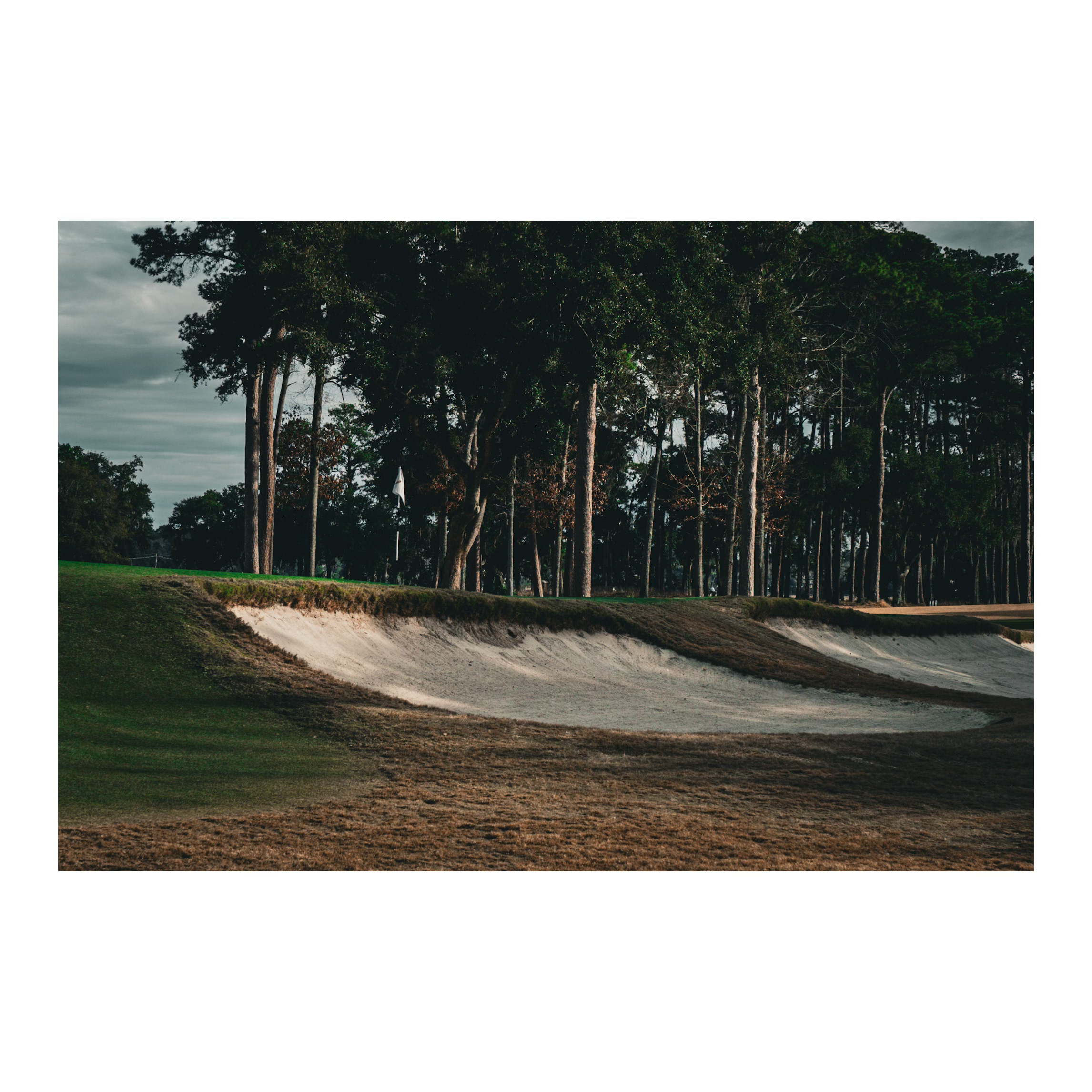
When C&C and Tom Doak, among others, started popularizing these ideas in the 1990’s, it flew in the face of the golf orthodoxy of the time, which was focused on making courses bigger, longer, and amenity-driven. Most of the golf you have likely played in the South is a good exemplar of this- think railroad ties, plenty of water holes, and housing developments. Chechesse opened in 2000, when perhaps C&C's most notable courses were Kapalua and Sand Hills. In the ancient pre-social-media era of our immediate past, it was hard to even find pictures of these places on the internet, and you mostly just heard whispers about their existence. It was a different time and place then. Ran Morrisssett wrote a great review, as he always seems to, of Chechesse on Golf Club Atlas in 2006. He knew what he saw, and it speaks to my golfing heart:
“Chechessee Creek Club is a throwback to a time when golf was simpler.
Gone are the insipid mounds that plague so many modern coastal South Carolina courses. Gone are the long green to tee hikes that make riding a golf cart a foregone conclusion. Gone is sacrificing sound course design in the quest of a signature hole. Gone are decorative waste bunkers of no strategic value. Gone is the fear of losing golf ball after golf ball in man-made water hazards. Gone is the concept that a course built today must adhere to some banal formula of par 72, 7,000 plus yards….What is apparent are traditional design elements of the kind that the coast of South Carolina has rarely seen since Seth Raynor worked in Charleston in the 1920s. Just as the sub-7000 yard Harbour Town with its small greens was revolutionary in the early 1970s, Chechessee’s sub-6,700 yard design is a welcome return to shotmaking.
And these lines, also from Golf Club Atlas, from shaper Dave Axland provided further scope on the project: “the principal challenge at Chechessee, besides getting that flat site to drain without moving much dirt, was to develop bold golfing features and yet not overwork the site to the point that you wouldn’t appreciate the specimen trees or inherent Low Country nature of the property. Seth Raynor’s work at nearby Yeamans Hall and the Country Club of Charleston served as somewhat of an inspiration or model. We aimed to create strong green and bunker features at Chechessee in the image of Raynor’s basic style.”
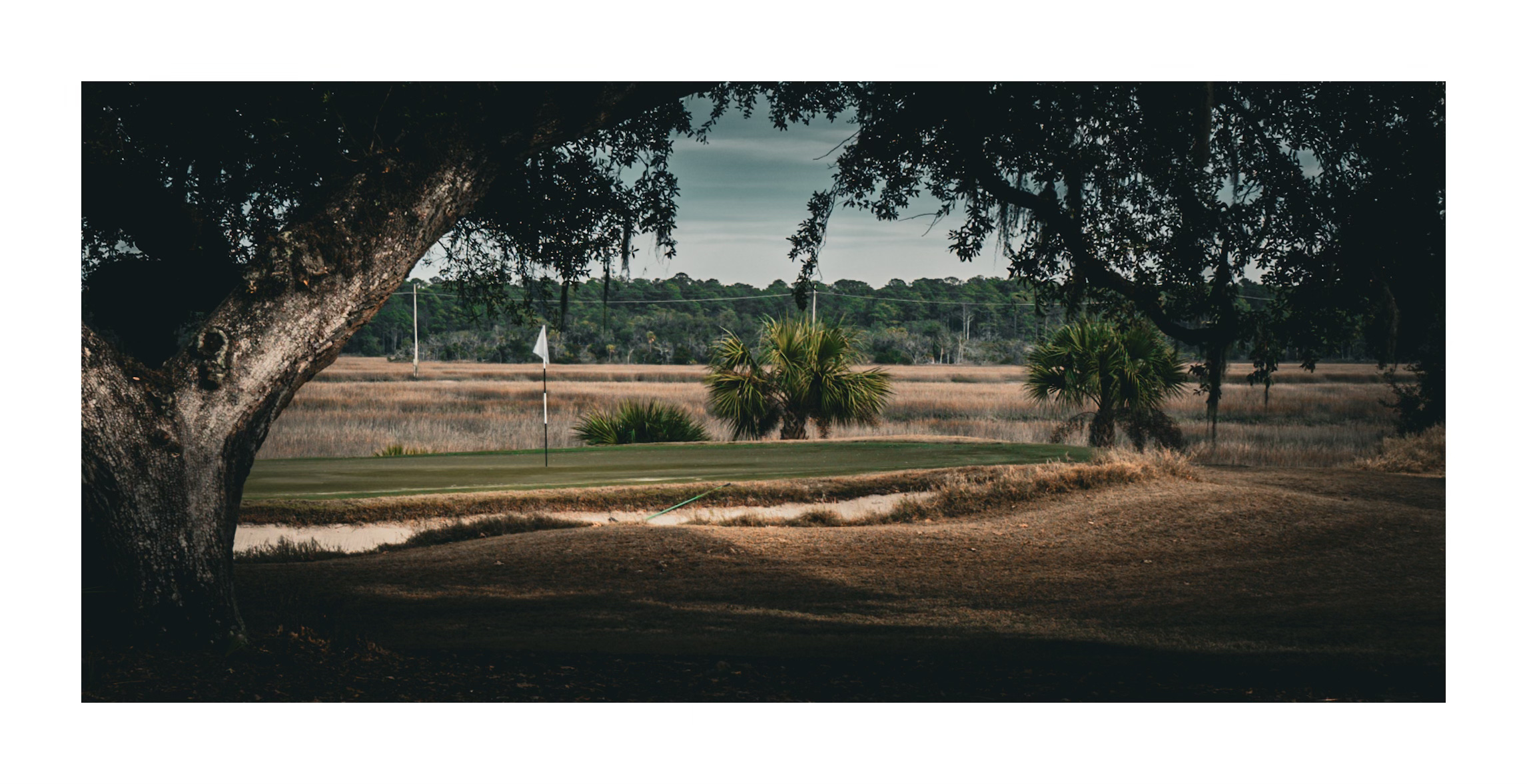
In the years that followed, C&C cemented itself as a major design firm and as a major player in ushering in the second “Golden Age” of golf course architecture. The courses that came next are places you have heard of: Old Sandwich, Bandon Trails, Friar’s Head, Cabot Cliffs, Lost Farm, Sand Valley, Sheep Ranch, Streamsong, etc. Iconic and spectacular sites. And this is what you think of typically when you hear the C & C name. So it felt historical and important to see a golf course built by this firm in the earlier part of their career, when it still felt rebellious to build courses like this on land that wasn’t spectacular, and that wasn’t attached to a new resort.
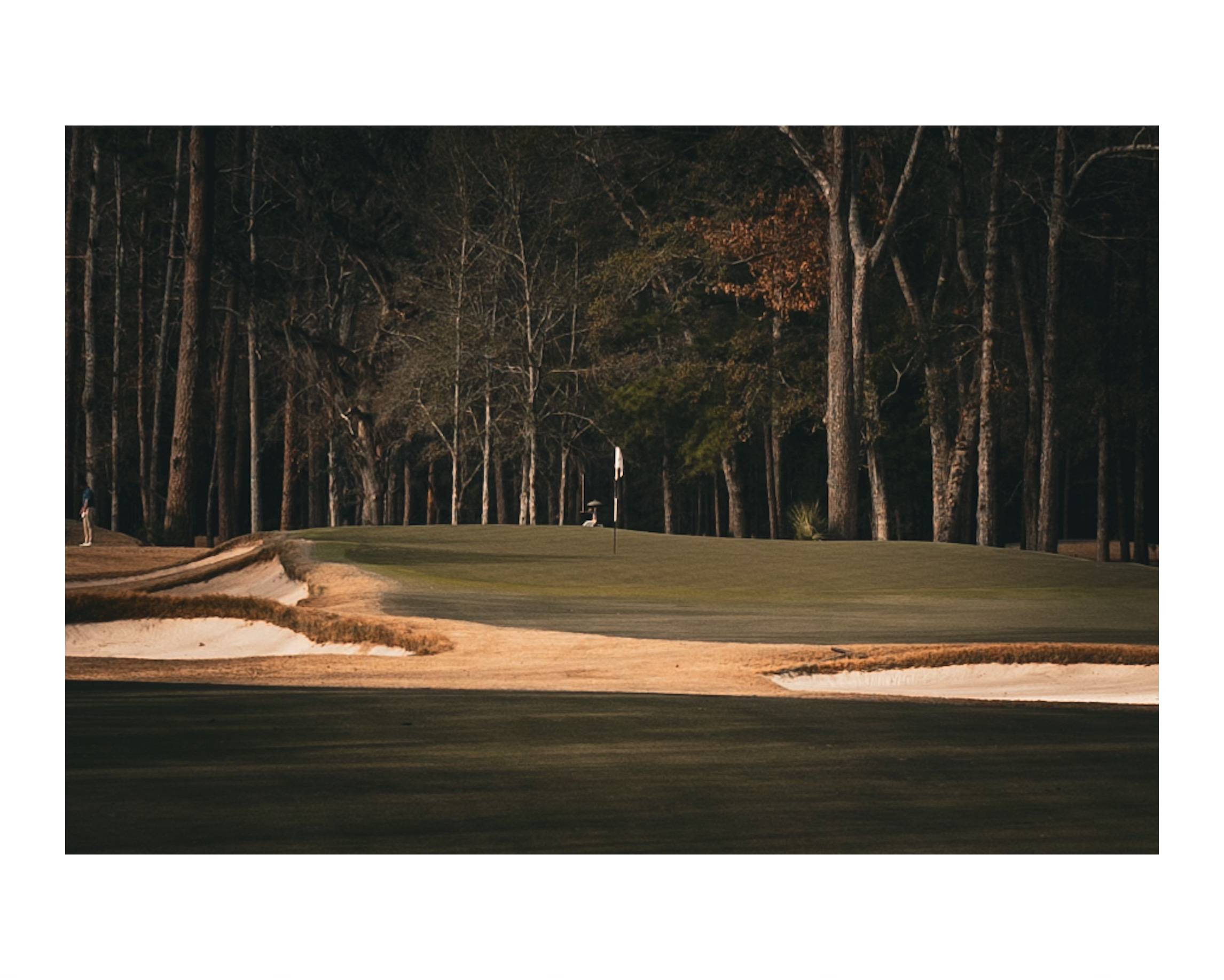
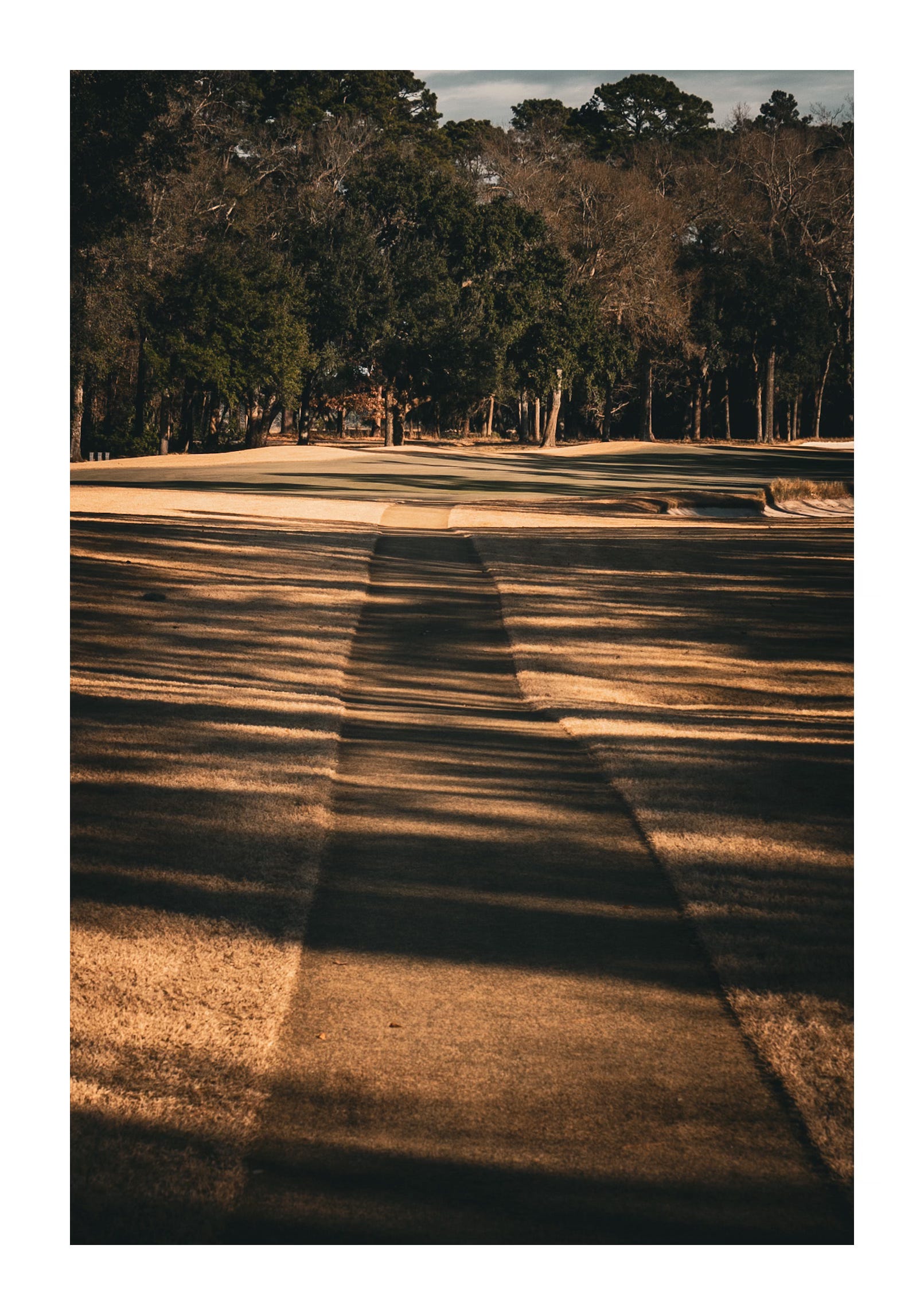
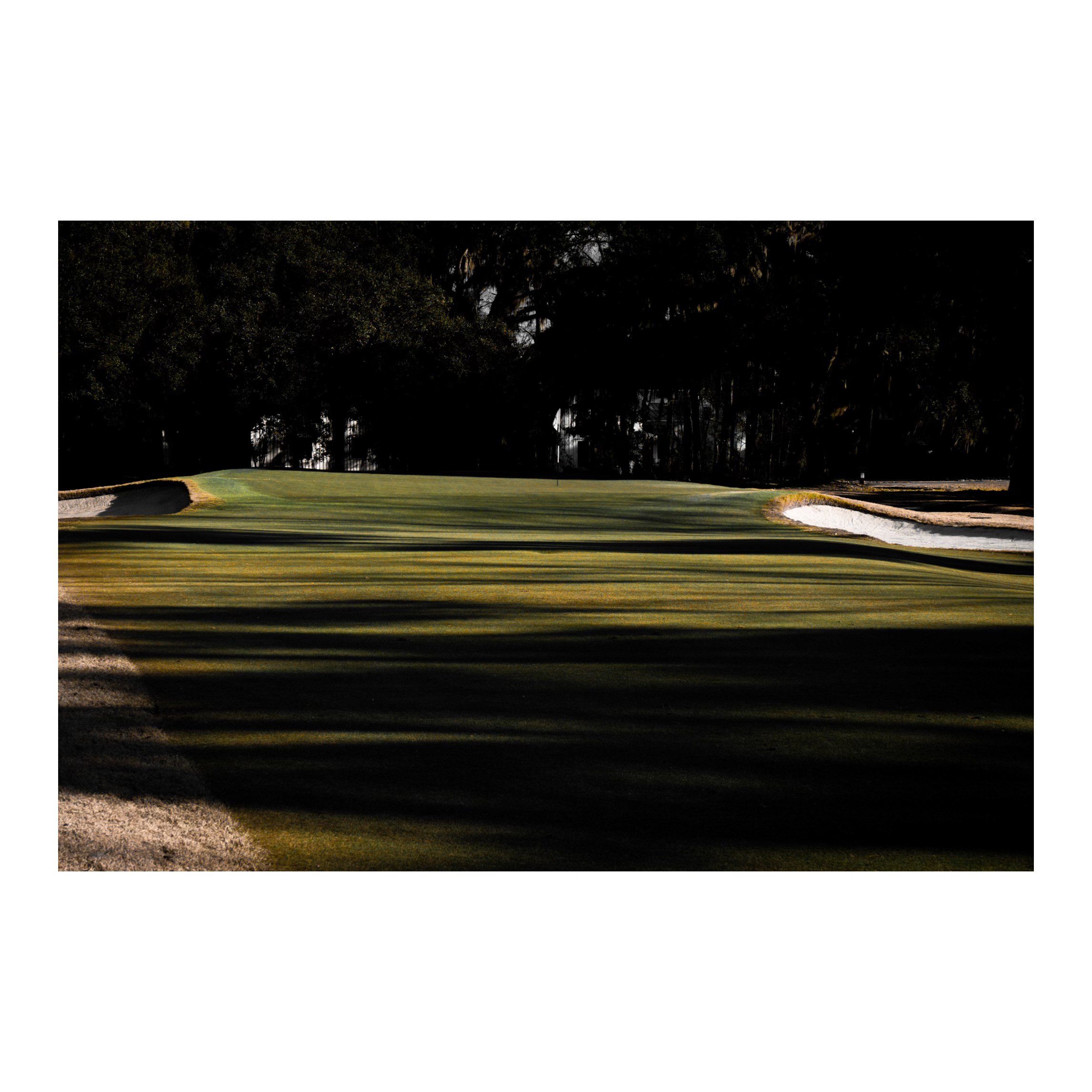
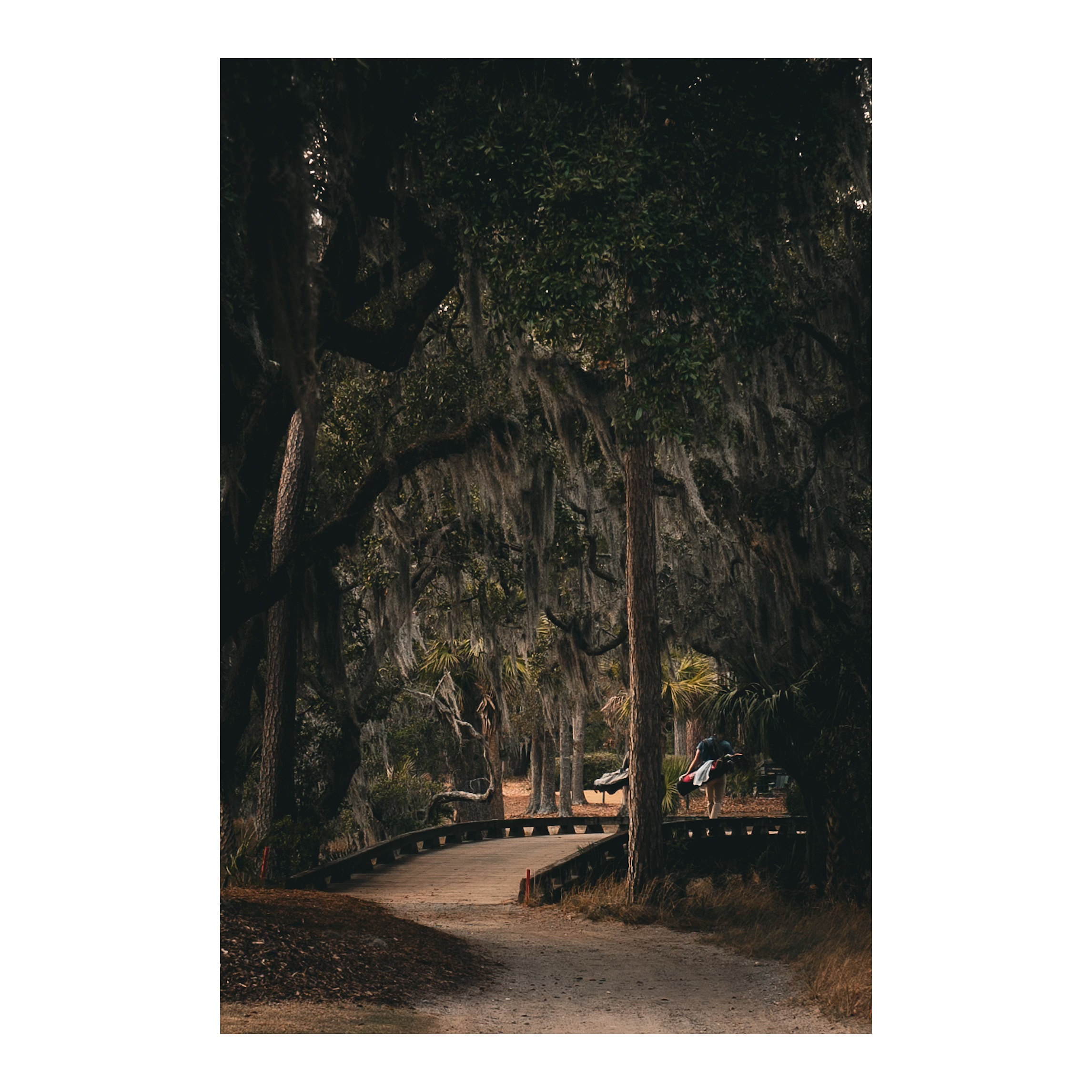
One of the things that makes writing about golf courses tricky is that there is a tendency to categorize or qualify each new course that one sees. To try to make sense of your own experience. I suppose we could probably say that about anything. Chechessee Creek Club stands out in this part of the world because it’s well routed, understated, and features a set of greens that provide intrigue and strategy without being over-the-top insane. We caught a dormant winter course that was playing fast and firm, and we were repeatedly reminded that what is simple and fun is not necessarily easy. Playing to the front of the greens and two-putting was the winning approach in retrospect (I only partially cracked this code). The entire operation, from the golf course to the clubhouse to the on-property cottages, gets the details right and sort of melts seamlessly into the oaks, palms, and Spanish moss surrounding the course. It’s quiet. And comfortable. And a lot of fun. In its lack of grandeur, C3 hints at something a little more timeless and deeply rooted in the spirit of the game. I liked it very much. If a golf trip with a bunch of funny guys that culminates in eating a family-style, fried chicken dinner in the men’s locker room, watching the NFL playoffs, after walking 36 holes, is not your thing, then I would politely refuse any invitations that might come your way. Feel free to give them my name instead.
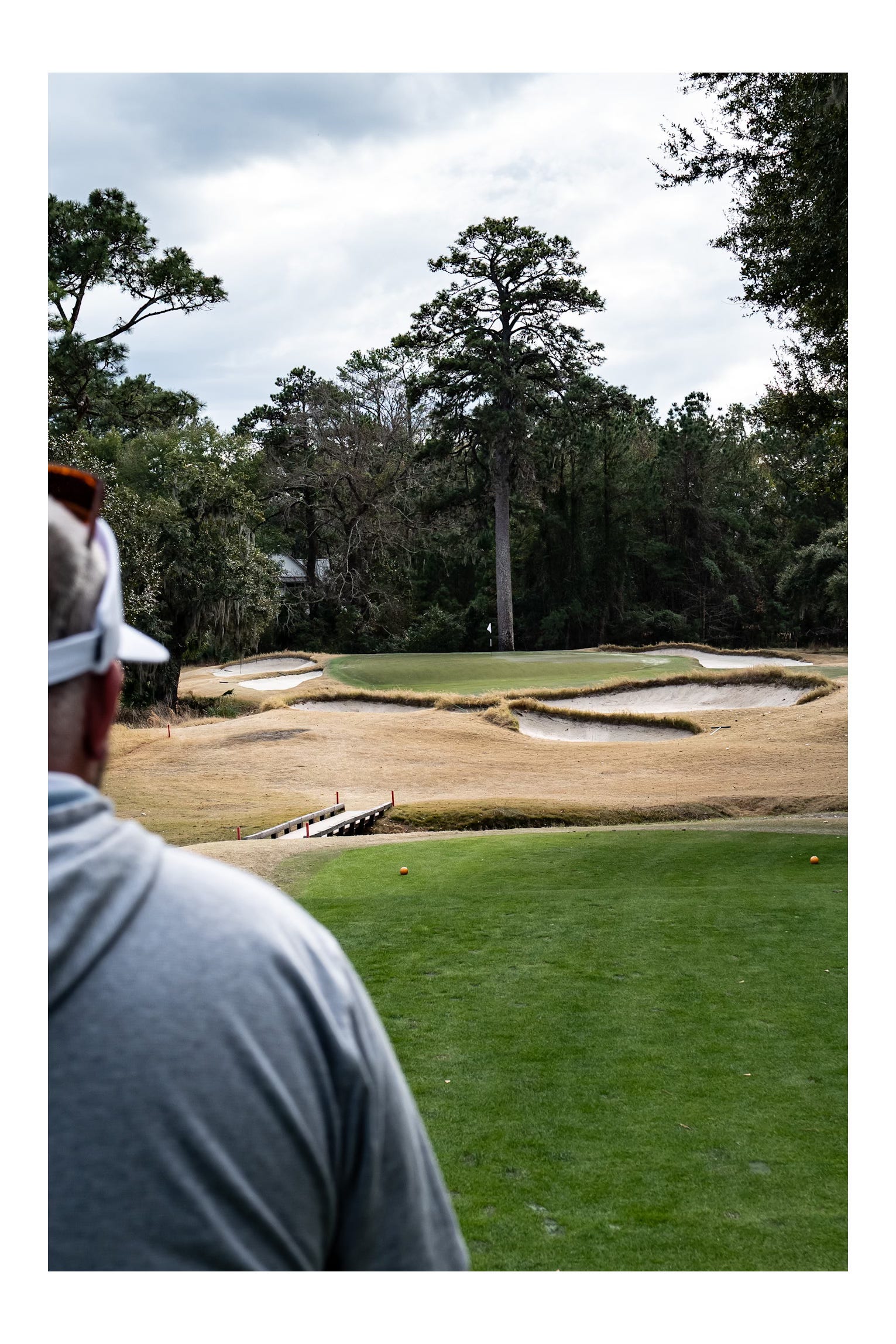

We played a bunch of golf in four days, settled our many bets, and then it was time to leave. At one point during the third or fourth loop of the course, I made it a point to look across the tidal flats- in the general direction of Parris Island- and wondered how much I actually remember about my time there. What memories did I really have about a place that fundamentally impacted the person that I have become? I stopped walking for a moment and thought that I could hear the cracks and pops from the rifle range from across the river, but it was only the wind. And maybe the ghosts. And so I moved on, clubs gently rattling on my back in the late afternoon light.
The process of making Marines at Parris Island, for all its legend and stories, has always been pretty simple. You get torn down to be built back up. You learn to pay attention to details as a rite of passage. It’s not pretty. It’s not quiet. And there is only the wrong way and the Marine Corps way to do things. Tradition is important in this dynamic as well, and whatever you think of the Marine Corps ethos, it, too, carries a timelessness hard-won and fiercely protected. And that counts for something, still, I think. I know it taught me an awful lot. And that it also left me with many unanswered questions that, thankfully, seem more distant than they used to feel.
My platoon in boot camp lived on the third deck of our assigned barracks. I had a top bunk centered on a large window (we would have called it a porthole) that looked across the tidal swamps. That slight height advantage in this part of the world meant that each night, before I collapsed into an exhausted sleep, I could see, in the distance, the bridge that takes you to and from Hilton Head and Savannah and all of the other places in the world outside of the Marine Corps where it felt like life was still happening. Lying there under the scratchy olive drab blanket, I would imagine that the twinkling lights in the distance moving across the bridges were vehicles full of happy families on their way home from dinner or the beach or maybe even a day of golf. I wondered about my own life choices and where all of this was going to take me. And then, quicker than you will ever believe, it would be early morning, and a new day would begin.
On the flight home, it occurred to me that I was probably going through boot camp at the same time Chechessee was being built, and that also gave me pause and a moment of wonder about whether that means anything beyond a coincidence of time and place and circumstance. I don’t think the 18-year-old version of me would have cared much that a pretty good golf course was being built in the swamps across the river. But he might have. But I do care about such things now, and think that the charm of the Chechessee Creek Club- the respite that it’s trying to provide- in this old and mysterious part of the world left me thankful to have been able to see it.
You should go if you get the chance.
Shout-out to P. for the invite and hospitality, and to the fellas for the warm welcome; I had a blast. Pat LaFontaine over Claude Giroux.
What a pleasant unfolding of compression; the slow, measured release of memory, experience, and presence. I'm not sure what the kids these days are calling it, but Everything, Everywhere, All At Once is much more compelling than the mundane moniker of maturity. Thanks for this!